
Most homeowners think a remodeling project starts the day demolition begins. But more often than not, the direction of a project is already set long before that.
The projects that feel organized, predictable—even enjoyable—don’t get there by luck. They come from taking the time to think things through early, before the noise and pace of construction take over.
The Remodel Nightmare (And Why It Happens)
If you’ve talked to anyone who’s been through a renovation, you’ve probably heard a version of this:
- The budget kept creeping up.
- The scope felt unclear halfway through.
- Decisions had to be made quickly, without much time to think them through.
- And the timeline… didn’t quite hold.
That experience is common—and it’s not usually because someone did a bad job. More often, it’s because construction started before enough of the project was actually figured out.
When decisions get pushed into the construction phase, everything becomes more reactive. You’re making calls under pressure, costs become harder to control, and the whole experience starts to feel heavier than it needs to be.
Remodeling Doesn’t Start With Demo. It Starts With Planning.
A lot of what makes a project successful happens before anything is built.
Pre-construction isn’t just a preliminary step—it’s where the real groundwork gets done. It’s the phase where you sort through priorities, uncover potential issues, and start to build a plan that actually holds up once work begins. The more clarity you have going in, the fewer surprises you’ll deal with later.
What Pre-Construction Typically Includes
A solid pre-construction process is really about replacing assumptions with clarity.
It usually starts with alignment—getting clear on goals, priorities, and constraints (often through an early planning or alignment phase). That sounds simple, but it’s where a lot of projects either come together or start to drift.
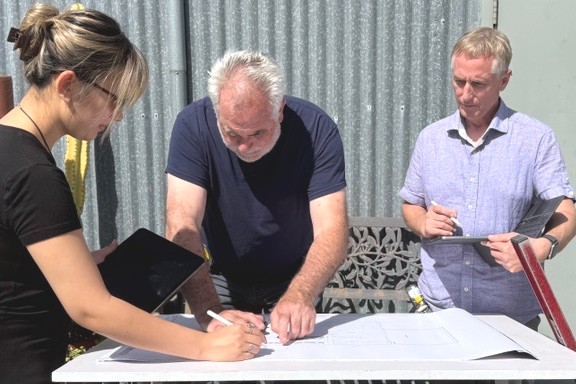
Bringing trades into the process early also makes a big difference. Walk-throughs and coordination (site visit) help surface potential issues before they turn into delays or change orders. It’s much easier to adjust a plan on paper than it is mid-build.
From there, estimating becomes more of a conversation than a number. Early, high-level pricing (preliminary estimate) helps set expectations, and more detailed pricing (detailed estimate) follows once the scope and selections are better defined. That progression gives you room to make decisions thoughtfully, instead of reacting later.
Why This Matters to Homeowners
All of that upfront effort changes how the project feels once construction begins.
- Fewer surprises.
- More control over costs.
- Less pressure to make rushed decisions.
Instead of constantly reacting, you’re moving through a plan that’s already been thought through. Communication tends to be clearer, timelines more reliable, and the overall experience a lot more manageable.
It doesn’t make a remodel effortless—but it does make it far more predictable.
A Real-World Difference
A lot of homeowners start out thinking they’ll figure things out as they go. And to be fair, that sounds reasonable—until you’re in the middle of a project and realizing how many decisions are coming at you all at once.
In one recent project, early conversations with trades uncovered structural considerations that would have caused delays if they’d only come up during demolition. Because that was caught early, the plan was adjusted ahead of time, and the project moved forward without that disruption. That kind of thing doesn’t always get noticed—but it’s exactly what keeps a project on track.
The Bottom Line
A successful remodel isn’t about moving quickly—it’s about moving forward with a clear plan. No matter who you work with, the most important progress happens before construction begins. Taking the time to define scope, make key decisions, involve the right people early, and build a realistic plan will make the rest of the process much easier to navigate.
If you’re planning a remodel, it’s worth slowing down at the start. Ask how the project will be planned, not just how it will be built. Understand how numbers are developed. Make sure decisions are happening before demo, not during.
The more clarity you have going in, the smoother and more predictable the entire project becomes.


